
Our Manufacturing Capabilities
From concept to production – comprehensive plastic packaging solutions with cutting-edge technology and precision engineering.

Development
Packaging That Works Where It Matters
Looking for packaging that looks great and runs smoothly on your equipment? At Arda Plast, we design packaging with the full picture in mind: brand impact, filling line efficiency, shelf presence, supply chain performance, and recyclability. With 50+ years of thermoforming experience, we combine engineering know-how with hands-on collaboration. As a mid-sized company, every project gets real attention — from leadership to the production floor — so you get faster development, quicker decision-making, and packaging that performs reliably in real-world conditions.
Why Customers Choose Our Development Team
- Custom shapes and decoration are built around your brand and your equipment
- Fast development cycle and direct access to decision-makers
- Packaging engineers who both design and run the production and line trials
- Full in-house CNC tool shop for precise mold building and fine-tuning
- Proven performance on high-speed filling lines and HPP applications
- Control over material properties — we produce our own thermoforming sheet
- Decoration planning starts at the product concept stage
- Experience working with global brands and their approval processes
How We Work — Practical and Hands-On
Want packaging that fits your filling line the first time?
We start by understanding how your line works — headspace, sealing, lid fit, cycle speed, and tolerances. Design and performance go hand-in-hand from day one.
Need a custom shape, but don’t want long delays?
Because we machine our molds in-house, we can refine dimensions in microns. We test on full production equipment, not small prototype machines, so performance is real — not theoretical.
Need material performance dialed in?
We make our own thermoforming sheet from raw polymer granules, allowing us to tune clarity, stiffness, seal strength, and recyclability.
Want confidence before full rollout?
Our engineers come to your facility to support start-up and run full-speed trials — ensuring smooth operation, stable sealing, and high uptime.
FAQ
How long does development take?
Depending on complexity, samples can be ready in a few weeks. Our structure allows quick iteration.
Can Arda run tests at my plant?
Yes — we regularly run on-site trials to validate performance at production speed.
How precise is the lid/cup fit?
We tune dimensions in microns using our in-house CNC tool shop and verify performance on real production tooling.
Do you design packaging for HPP?
Yes — we have extensive experience designing packaging that stays stable and sealed after high-pressure processing.
Can you scale from pilot to full production?
Absolutely. We support both small test runs and long-term high-volume supply programs worldwide.
Let’s Build the Right Packaging for Your Product
Ready to reduce downtime, improve performance, and elevate your shelf presence?
Our development team is here to help — let's get started.


Sheet Extrusion
PET & PP Sheet Production by ARDA Plast
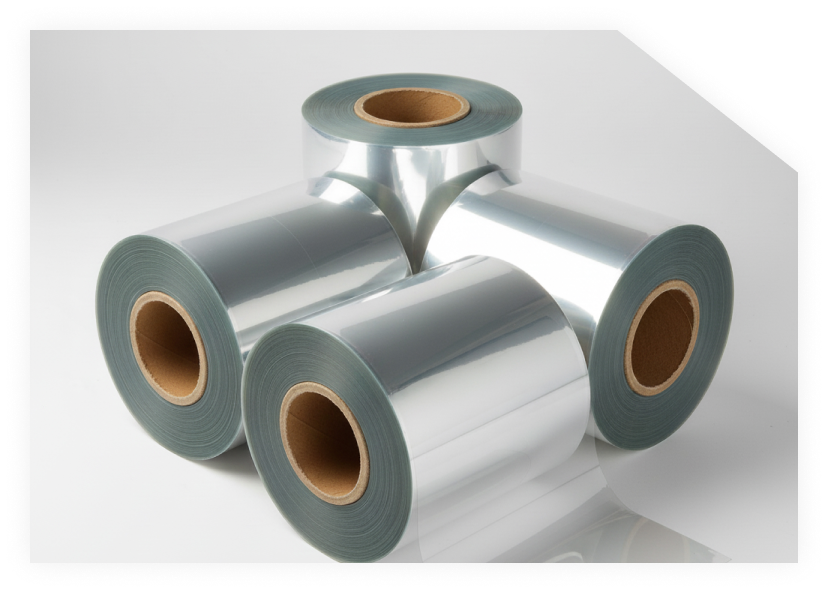
At ARDA Plast, extrusion is the foundation of our packaging production process. We produce high-quality, food-grade PET and PP sheets in-house using precisely controlled extrusion lines. These sheets serve as raw material for our thermoformed lids, cups, and trays—and are also supplied to other packaging manufacturers across the food industry.
By managing our own extrusion, we maintain strict control over quality, ensure material efficiency, and offer customization to meet both internal and external needs.
Typical Applications
- In-house thermoforming for cups, lids, and trays
- Sheet supply to food packaging producers
- Suitable for a wide range of chilled or ambient food products

Polypropylene

Polyethylene Terephthalate
Sheet Extrusion Process
Sheet extrusion is the process of melting, homogenizing, and forming plastic resin into a continuous flat sheet with defined width and thickness. At ARDA Plast, we operate extrusion lines with advanced process control, enabling us to produce sheets with high optical clarity, consistent thickness, and food-grade compliance that meet rigorous industry standards.
Material Options & Specifications
- PET (Polyethylene Terephthalate): 0.24 mm – 1.50 mm (0.009" – 0.059")
- PP (Polypropylene): 0.8 mm – 2.0 mm (0.031" – 0.079")
Both materials are certified for food-contact use and are available in transparent or colored versions, depending on customer requirements and end-use applications.
How We Use Extruded Sheets
- Internal Use: PET and PP sheets are thermoformed in-house into a wide variety of cups, lids, and trays
- External Supply: PET sheets are sold to packaging manufacturers with custom thickness and width specifications based on their forming needs
Benefits of In-House Extrusion
- Complete control over raw material quality and sheet consistency
- Seamless integration with forming and decoration processes
- Fast lead times with flexible customization options
- Ability to meet project-specific and client-specific requirements
- Reuse of sheet web after thermoforming for material efficiency
- Potential use of regenerated post-consumer materials for sustainable packaging
FAQ
What types of sheets does ARDA Plast produce?
We manufacture high-quality PET and PP sheets for thermoforming applications.
Can I order custom-sized sheets for my equipment?
Yes. We supply PET sheets with customized width, thickness, and winding specs tailored to your thermoforming setup and packaging goals.
Are ARDA Plast sheets food-safe?
Absolutely. All our sheets are produced using FDA-approved, food-grade materials under strict hygiene and quality protocols.
Do you offer colored sheets or sustainable options?
Yes. In addition to transparent sheets, we offer custom-colored options and the potential use of regenerated post-consumer materials, subject to feasibility and order volume.
Thermoforming
Precision-Formed Plastic Packaging.
At ARDA Plast, thermoforming lies at the heart of our packaging manufacturing process. We specialize in producing high-quality PET and PP cups, lids, and trays specifically tailored for the food industry. Our packaging is widely used for dairy products, deli salads, dips, snacks such as nuts and seeds, and a range of chilled or ambient food items.
We offer a wide selection of packaging in various sizes, with flexible options in both diameter and volume. ARDA Plast’s thermoformed solutions are durable, lightweight, and optimized for performance, protection, and shelf appeal.
Typical Applications
- Dairy – yogurts, creams, desserts
- Deli salads – hummus, coleslaw, etc.
- Spreads and dips – cheese spreads, guacamole, plant-based options
- Snacks – nuts, seeds, and dry food mixes
Our Thermoforming Process
Thermoforming is a manufacturing method where plastic sheets are heated and then formed into precise shapes using air pressure and custom molds. At ARDA Plast, we thermoform food-grade PET and PP sheets into functional, high-quality packaging components with smooth surfaces, consistent dimensions, and dependable sealing performance.
What We Thermoform
- Round cups – available in a variety of diameters and volumes
- Lids – compatible with ARDA Plast containers, offered in several styles
- Trays – custom-formed based on client requirements
- Decoration options – integrated methods including dry offset printing, shrink sleeves, labeling, and full-surface digital printing
Materials We Use
- PET (Polyethylene Terephthalate) – Excellent clarity and rigidity; widely recyclable
- PP (Polypropylene) – Microwave-resistant; ideal for cold-fill and ambient products
Why Choose Thermoformed Packaging?
- Cost-effective for medium to high production volumes
- Lightweight and nestable for efficient transport
- Precise dimensional tolerances support automated filling and sealing
- Customizable designs to meet your branding and functional needs
FAQ
What types of packaging does ARDA Plast thermoform?
We thermoform round PET and PP cups, lids, and custom trays in a wide range of sizes, specifically for food applications such as dairy, dips, salads, and snacks.
What materials are used in your thermoforming process?
We use food-grade PET and PP, chosen based on product requirements such as transparency, recyclability, temperature resistance, and sealing compatibility.
Can your packaging be customized?
Yes. We offer full customization in shape, size, volume, and rim style. Decoration can also be adapted using various methods to match your branding goals.
Are your thermoformed products recyclable?
Absolutely. Both PET and PP are recyclable materials. We also provide guidance on choosing decoration methods that support recyclability and sustainability.
Are your lids compatible with containers from other suppliers?
Many of our lid and container formats follow industry standards, which may allow cross-compatibility. If you’re combining our products with packaging from other sources, we’re happy to help assess compatibility.

Injection Stretch Blow Molding
High-Precision PET Jars and Bottles by ARDA Plast.
At ARDA Plast, we use Injection Stretch Blow Molding (ISBM) technology to manufacture high-quality PET jars and bottles for the food industry. This advanced process allows us to produce containers in a wide range of shapes and volumes—with excellent clarity, strength, and consistency.
From 50 cc to 3000 cc, our packaging solutions are designed to meet diverse filling, labeling, and branding requirements. Whether for shelf-stable or refrigerated products, our ISBM packaging is ideal for brands that demand performance, hygiene, and visual appeal.
Typical Applications
Key Benefits
- Soft drinks and bottled water
- Mayonnaise, sauces and condiments
- Spices, seeds and dry foods
- Private label products with diverse SKUs
Process Overview
- Technology: Injection Stretch Blow Molding (ISBM)
- Material: PET (FDA-approved, food-grade)
- Shapes & Sizes: Jars and bottles ranging from 50 cc to 3000 cc
- Neck Finishes: Threaded and snap-on closures in various formats
- Decoration Compatibility: Suitable for adhesive labels and shrink sleeves
About the Technology
Injection Stretch Blow Molding is a two-stage manufacturing process used to produce hollow PET containers with excellent dimensional control and mechanical strength. First, a preform is injection molded. It is then transferred to a blow mold, where it is mechanically stretched and blown with high-pressure air into its final shape.
This method combines the precision of injection molding (especially for neck finishes) with design flexibility and strength of blow molding. The result: lightweight, transparent containers with high wall strength and reduced gas permeability—perfect for food packaging and extended shelf life.
Advantages of ISBM Packaging
- Crystal-clear transparency for premium shelf appeal
- High strength-to-weight ratio
- Precise neck finishes for secure sealing
- Excellent compatibility with labeling and sleeving processes
- Broad range of shapes and volumes for product versatility
FAQ
Q: What packaging formats can ARDA Plast produce with ISBM?
A: We produce PET jars and bottles ranging from 50 cc to 3000 cc in various shapes and neck finish options, tailored to the food industry.
Q: What material do you use in this process?
A: We use PET that is food-grade and FDA-approved, offering excellent clarity, durability, and barrier properties.
Q: Can I apply shrink sleeves or labels to these containers?
A: Yes. ISBM containers are ideal for full decoration using either shrink sleeves or adhesive labels, allowing for strong branding and differentiation.
Q: Are your ISBM containers suitable for hot filling?
A: Standard ISBM containers are generally suitable for ambient or cold fill. For hot fill applications, we recommend contacting us to explore compatible options.
Q: Do you offer closures for ISBM bottles and jars?
A: Absolutely. We offer matching closures in various styles, including screw caps and snap-on options, and can help you create a complete packaging solution tailored to your product and brand.


Decoration Technologies

Labeling Technologies
At ARDA Plast, we offer a wide range of decoration technologies designed to meet diverse branding, functional, and operational needs in food packaging. From direct printing on the container to advanced labeling and full-surface decoration solutions, each method provides a different balance of visual impact, cost, and performance. By combining our manufacturing capabilities with multiple decoration options, we enable our customers to select the most suitable solution for their product, market positioning, and production requirements.
Advantages
- High-resolution print quality for vivid, detailed branding
- Supports a wide range of label shapes, finishes, and artwork updates
- Compatible with flat and slightly curved surfaces
- Quick adaptation for different SKUs, languages, and promotional designs
Limitations
- Labels offer less surface coverage compared to full-body decoration options like shrink sleeves and dry-offset printing. (Add links to other pages in the website)
- May impact recyclability if labels and containers are not made from the same material
Injection Molding
Precision-Molded Closures by ARDA Plast
Injection molding is a versatile and widely used manufacturing process for producing high-precision plastic components. At ARDA Plast, we apply this technology to create durable, functional closures for our blow-molded containers—where secure sealing, product protection, and tamper evidence are essential.
Our injection-molded closures are designed for consistency, compatibility, and performance across a wide range of food packaging applications.
Typical Applications
- Closures for PET jars and bottles
- Tamper-evident caps
- Secure sealing for spreads, sauces, and dry products
±0.1mm
Tolerance
15s
Cycle Time
24/7
Production
Process Overview
Injection molding involves melting plastic resin, then injecting it under high pressure into a precision-engineered mold cavity. Once filled, the mold is cooled, and the material solidifies into the final shape, achieving tight dimensional tolerances and excellent repeatability.
As with other plastic conversion processes, the selection of resin is determined by the mechanical, chemical, or thermal performance required from the final product.
At ARDA Plast, injection molding is primarily used to manufacture closures that are tailored to fit our injection stretch blow molded (ISBM) containers.
Key Features
- High dimensional accuracy and repeatability
- Smooth surface finish and strong mechanical properties
- Compatible with a variety of PET containers
- Can be engineered for tamper-evident or resealable designs
Applications & Integration
- Closures for ARDA Plast’s blow-molded jars and bottles
- Caps suitable for sealing sauces, spreads, and dry foods
- Secure-fit designs for shelf-stable and refrigerated products
- Custom closure solutions matched to branding and usability needs
FAQ
Q: What products does ARDA Plast produce with injection molding?
A: We primarily manufacture closures for our ISBM-produced containers, including tamper-evident and secure-fit options.
Q: What materials are used in your injection molding process?
A: The material selection depends on the specific use case, but we typically use food-grade polymers that offer durability, sealing integrity, and compatibility with PET jars and bottles.
Q: Are your injection-molded closures tamper-evident?
A: Yes. We produce closures with integrated tamper-evidence features to help ensure consumer safety and product integrity.
Q: Can I order closures separately from containers?
A: While our closures are optimized for ARDA Plast containers, we can offer them as standalone items depending on compatibility and volume. Contact us to explore your specific needs.
Q: Do you offer custom closure designs?
A: Yes. We offer custom molding solutions based on design specifications, branding requirements, and technical feasibility.

FAQ
Yes. We work with clients from the earliest concept phase, providing technical input on feasibility, material selection, manufacturability, and cost optimization before tooling begins.
Absolutely. We analyze current packaging performance and suggest structural, material, or tooling improvements to enhance sealing, efficiency, and production stability.
We design components according to your filling and sealing equipment specifications, including torque parameters, snap dimensions, and automation constraints to guarantee smooth integration.
Yes. We provide rapid prototypes and pilot samples to validate fit, sealing, and functional performance before committing to full production molds.
We primarily support the food and beverage industry, including dairy, ready meals, sauces, and HPP applications, where precision sealing and structural integrity are critical.
Contact us
Have an Upcoming Projects? Contact Us Today!
Advanced Engineering for Bespoke Packaging Solutions