
Labeling Technologies
Complete labeling solutions from carton packaging to digital printing – delivering exceptional branding and regulatory compliance.

Wrap-Around CardBoard (PaperBoard) Sleeve
ARDA Plast offers a wrap-around cardboard sleeve solution as a decoration method for plastic cups, perfect for hot-filled beverages like dairy drinks and coffee-based products. The sleeve acts as a high-impact branding surface and a practical thermal barrier, improving the consumer experience while still being recyclable. This method is best for applications where heat resistance and premium presentation are important.
The Technology Behind Our Cardboard Wrap Labeling
The cardboard sleeve is designed to match the contours of the cup, allowing for full-surface branding with high-quality printing. It can support vivid graphics and special finishes. In addition to its appearance benefits, it also provides heat insulation, making it perfect for hot-filled products.
As a separate material, the sleeve can be easily removed, improving the recyclability of both the plastic cup and the cardboard.
This solution is specifically created for products that undergo hot filling, such as:
- Coffee-based dairy drinks
- Chocolate milk
- Functional beverages
- Any high-temperature filling process
The cardboard serves as both a branding surface and a thermal barrier, enhancing the comfort of holding the cup and providing a premium tactile experience for the end consumer.
Cost Considerations
Because of the premium materials used and the additional step of wrap application, this solution comes at a higher cost compared to other decoration methods. However, it offers elevated shelf presence, tactile branding, and added insulation—making it an ideal choice for brands seeking standout packaging for high-value or specialty products.
Key Features
- Full-color printed wrap in custom designs
- Food-safe, recyclable cardboard
- Fits cups of different volumes and shapes
- Insulating properties for improved consumer handling
Sustainable and Smart
The cardboard sleeve decoration reduces plastic usage and enhances recyclability. By allowing the wrap to be easily separated from the cup, both components — cardboard and plastic — are more likely to enter their correct recycling streams. This dual-material approach balances performance and environmental responsibility.
FAQ — Cardboard Sleeve Labeling
What is the cardboard wrap made of?
We use food-safe, high-quality printed cardboard with options for matte or glossy finishes. It is cut and shaped for a snug, precise fit to each cup design.
Is the wrap recyclable?
Yes, the cardboard can be separated and recycled with paper waste. The cup itself remains mono-material (PP), supporting full recyclability.
When is the wrap applied?
The wrap is applied before the cups are delivered. Food manufacturers receive a fully decorated cup, ready for immediate filling.
Can the wrap withstand hot filling?
Absolutely, this solution is specifically designed to tolerate hot-fill temperatures without warping or losing structural integrity.

Direct Printing – Dry Offset
Direct Dry-Offset Printing – High-Quality, Cost-Efficient Printing
At ARDA Plast, we specialize in dry-offset printing on cups and lids, offering a trusted solution for quickly and efficiently decorating plastic food packaging. Dry-offset printing provides exceptional color fidelity and design flexibility directly onto plastic surfaces.
Advantages of Dry-Offset Printing for Food Packaging
Direct-to-Container Printing: Your artwork is printed directly on the plastic surface eliminating the need for labels or sleeves.
Fast and Economical: Ideal for high-volume production with lower unit costs compared to digital or shrink-sleeve methods.
Eco-Friendly Choice: No adhesives or label waste, resulting in a cleaner, more recyclable package.
Excellent Color Reproduction: Up to 6-color printing with high-impact visual detail.
Long-Lasting Results: Resistant to moisture, handling, and temperature fluctuations, making it perfect for refrigerated or frozen foods including HPP (High Pressure Processing).
Limitations:
While efficient, dry-offset printing technology may have limitations in achieving high-resolution images compared to other labeling technologies, such as shrink-sleeves and labels.
For cups the printing is limited to cups with straight walls.
Whether you’re a product manager, procurement specialist or packaging engineer, ARDA Plast provides the technical clarity and industry expertise to support your project from start to finish.

Polypropylene

Polypropylene
Direct Dry-offset printing, also known as letterset printing, is a hybrid printing method that combines the speed of letterpress with the flexibility of offset printing. Unlike traditional offset printing, no water is used in this process, making it ideal for plastic substrates where moisture could affect the material’s shape or performance.
This technique utilizes a series of flexible printing plates and a blanket cylinder to transfer ink directly onto containers. It’s perfect for round, conical, or flat plastic containers, delivering vibrant, multicolor graphics with precise alignment at high production speeds.
Applications in the Food Industry
Dry-offset printing is widely used across the dairy, deli, spreads, desserts and beverage sectors. Whether you're launching a new product or rebranding an existing one, ARDA Plast ensures consistent, high-quality printing that enhances your packaging and elevates your brand presence.
FAQ
- What is dry-offset printing, and how does it work?
Dry-offset printing, also called letterset, is a high-speed printing method that transfers ink from a flexible plate to a rubber blanket, and then directly onto a plastic container. Unlike traditional offset printing, it does not use water or dampening solutions, making it ideal for non-porous plastic substrates such as PP (Polypropylene) or PET (Polyethylene Terephthalate).
- What types of plastic packaging are suitable for dry-offset printing?
Dry-offset printing is best suited for lids and rigid plastic containers that have the following attributes:
- Round and conical shape
- Straight walls
- Minimum wall height of 300 mm.
Materials typically used include PP (Polypropylene) and PET (Polyethylene Terephthalate).
- What are the advantages of dry-offset printing over labels or sleeves?
- Direct-to-container printing eliminates the need for adhesive labels or shrink-sleeves.
- Lower cost per unit for high-volume production.
- Environmentally friendly, with less material waste - One Material.
- Durable print that resists moisture, abrasion, cold storage conditions and HPP (High Pressure Processing).
- Design flexibility with multicolor printing (up to 6 colors).
- How many colors can be printed using dry-offset?
ARDA Dry-offset machines can print up to 6 colors with excellent registration. This allows for branded designs with gradients, fine lines, and vibrant finishes.
- Is dry-offset printing food safe?
Yes, at ARDA Plast, we use food-safe, low-migration inks that comply with industry standards for food contact materials. Our processes are optimized for safety and hygiene in compliance with global food packaging regulations.
- What is the typical lead time for dry-offset printed packaging?
Lead times depend on factors such as order volume, artwork complexity, and tool availability. Typically, production can begin within 2 - 4 weeks after purchase order and artwork approval. For repeat orders, turnaround times are often shorter.
- Can I print variable data (barcodes, batch numbers) using dry-offset printing?
Dry-offset printing is ideal for fixed design elements like barcodes but it is not suitable for variable data, such as batch tracking.
- What’s the minimum order quantity (MOQ) for dry-offset printing?
Dry-offset printing is most cost-effective for medium to large production runs due to the setup involved. Typically, MOQs start at 50,000 units, depending on the container and lid type as well as design.
- How should I prepare artwork for dry-offset printing?
Artwork should be submitted in vector format (AI, EPS, or PDF) with proper color separations and clear dielines for the container shape. Our prepress experts at ARDA Plast will provide all the necessary guidance, print layouts and proofs before final approval.
- Does dry-offset printing work on transparent containers?
Yes, it does. However, it is important to consider design adjustments because inks may appear less opaque on clear surfaces.
ARDA Plast's prepress experts specialize in preparing paint formulas that address the limitations of printing on clear surfaces and offer guidance on designing to maintain color vibrancy.
Have more questions?
We are here to help! Contact ARDA Plast for personalized guidance, samples, or a technical consultation regarding your specific packaging needs.
👉 Get in touch with our experts. contact us
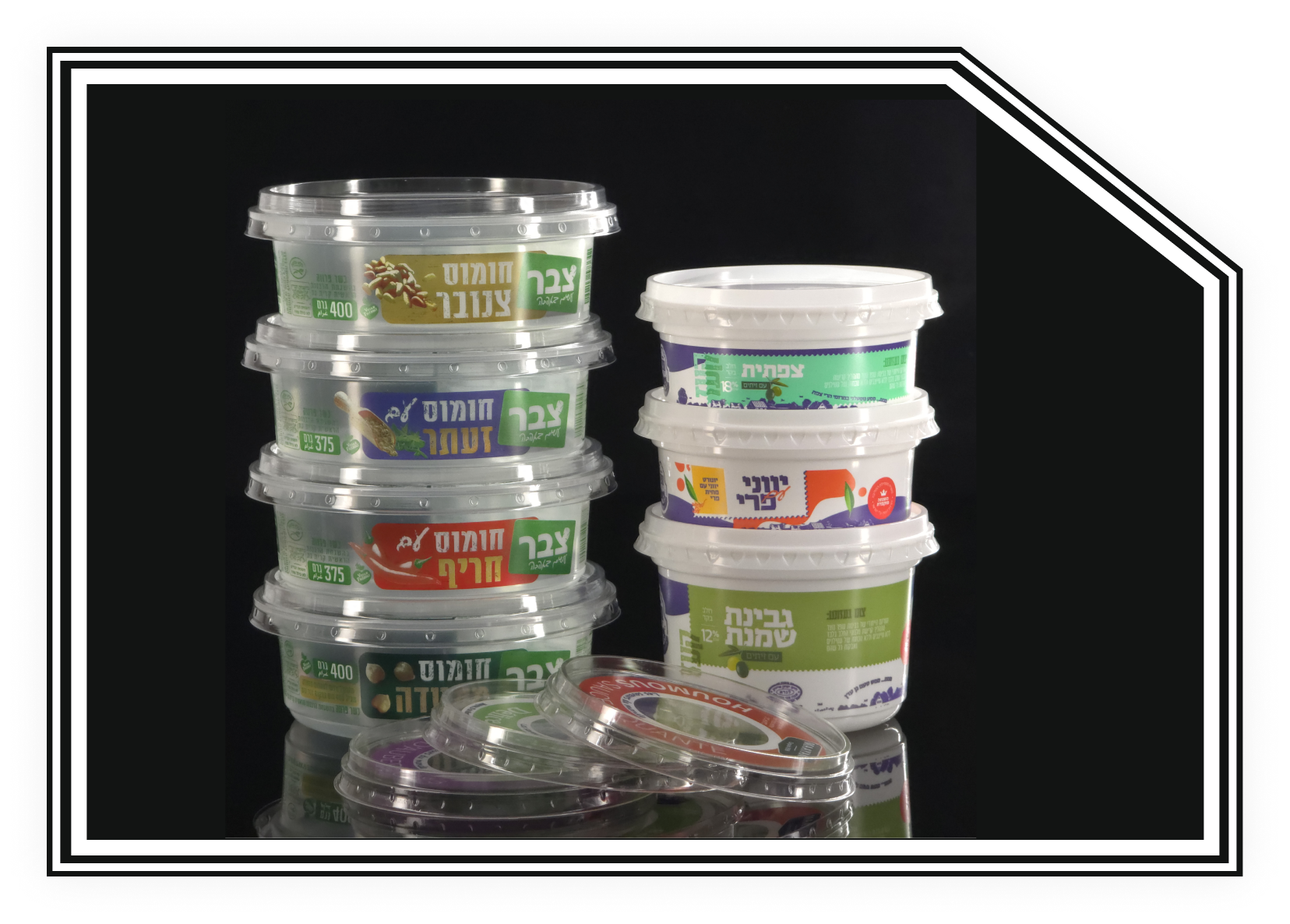
Labeling
At ARDA Plast, we offer a variety of decoration technologies for plastic food containers, including high-quality labeling solutions for both cups and lids. Labeling is a versatile option for customers seeking strong visual impact, design flexibility, and compatibility with various container shapes. For plastic cups and tubs, one or two labels — typically applied to the front and back — can be used to showcase branding and regulatory information. Labels are usually made from paper or polypropylene (PP), providing a cost-effective and attractive presentation for a wide range of food products.
- Temperature resistant adhesive
- Variable data printing compatible
- Moisture and chemical resistant
Advantages
- High-resolution print quality for vivid, detailed branding
- Supports a wide range of label shapes, finishes, and artwork updates
- Compatible with flat and slightly curved surfaces
- Quick adaptation for different SKUs, languages, and promotional designs
Limitations
- Labels offer less surface coverage compared to full-body decoration options like shrink sleeves and dry-offset printing.
- May impact recyclability if labels and containers are not made from the same material.
Technical Overview
- Label Materials: Available in paper or PP (polypropylene), depending on recyclability and moisture resistance needs
- Print Methods: Labels are pre-printed using flexographic or digital technology to ensure consistent quality
- Application: Labels are automatically applied to containers using industry-standard labeling machines
- Surface Compatibility: Most effective on flat or curved surfaces such as yogurt cups, salad tubs, and matching lid sets
- Label Formats: Includes front, back, single, and lid-top labels
Our labeling solution is optimized for both large production runs and product lines that require frequent design updates or multiple regional variants.
Practical Considerations
- Branding Area: Labeling provides a smaller printable area compared to dry offset or shrink sleeve decoration
- Recyclability: Using PP labels on PP containers improves recyclability. ARDA Plast can help you select material combinations that support your sustainability goals
Frequently Asked Questions
What types of ARDA Plast containers support labeling?
Most of our cups, tubs, and lids are compatible with label application especially containers with straight walls.
Can ARDA Plast provide recyclable labeling solutions?
Yes, we can help you select PP labels that are compatible with our PP containers to support mono-material packaging and simplify recycling.
How does labeling compare to other decoration options offered by ARDA Plast?
Labeling is a mid-range option in terms of cost. Dry offset is the most cost-effective solution, as it prints directly onto the container without using additional materials. Shrink sleeves are the most expensive, primarily due to the larger amount of material required and the full-surface print coverage. Labels require extra material as well, but in smaller quantities than shrink sleeves, making them a practical option for many applications.
Are labeled containers suitable for chilled or frozen food?
Absolutely. Our labels are moisture-resistant and designed to perform well in cold storage environments.
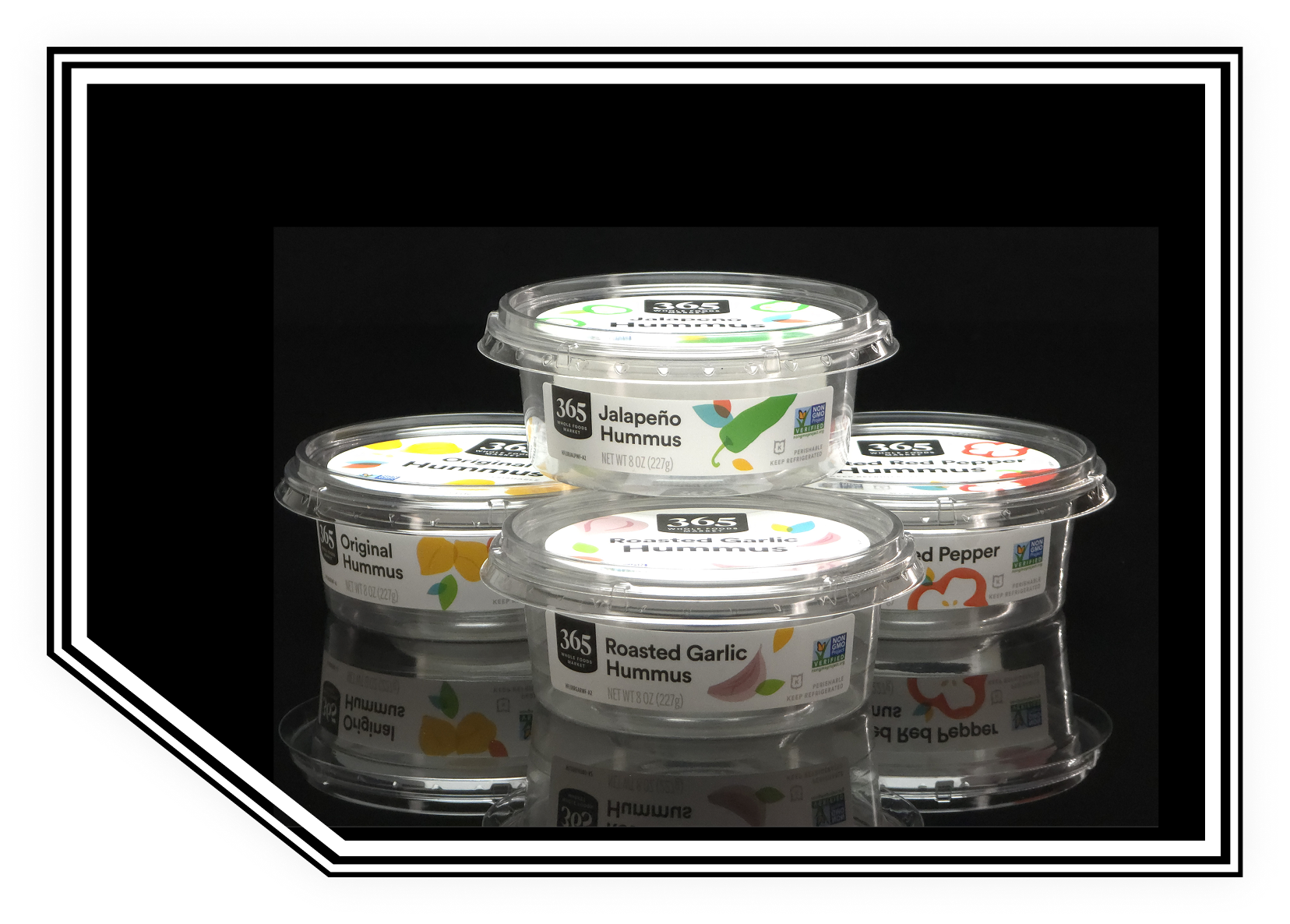
Sleeving
Shrink sleeve labeling is one of the decoration solutions we offer for plastic food packaging. It involves applying a printed plastic sleeve around the container, which is then heat-shrunk to conform tightly to the container’s shape. This creates a full-body label that offers 360-degree coverage—ideal for designs that require strong shelf presence or regulatory detail.
Shrink sleeves work well with containers that have complex shapes, curves, or varying diameters. They’re commonly used for yogurt cups, ready-meal tubs, and other consumer food products that benefit from high-impact branding.
When to Consider Shrink Sleeves:
- Full-Surface Branding Needs
Offers space for bold graphics, regulatory content, or multilingual packaging without crowding. - Irregular or Non-Standard Container Shapes
Unlike flat labels or dry offset, shrink sleeves adapt to complex shapes. - Tamper-Evident Packaging
Perforated or sealed shrink sleeves can serve as an additional security measure. - Short-Term Promotions or Limited Editions
Digital printing allows for flexible runs with customized artwork.
Features
- • 360° coverage
- • Tamper evident
- • Complex shapes
Materials
- • PVC sleeves
- • PETG sleeves
- • OPS sleeves
Considerations and Technical Overview of Shrink Sleeve Technology
Shrink sleeves offer several functional and visual advantages, but they also come with limitations that may affect your packaging decision. Here’s what you need to know when evaluating this option:
Technical Overview of Shrink Sleeve Labeling
Shrink sleeve labeling is a decoration method where a printed plastic film is formed into a tube, slipped over a container, and then heat-shrunk to conform tightly to its shape. The film is usually made from flexible materials such as:
- PET-G (Polyethylene Terephthalate Glycol)
- Polyolefin
- PVC (Polyvinyl Chloride)
Once positioned, the container passes through a heat tunnel (steam or hot air), which causes the film to shrink uniformly around the surface, adhering closely to every contour. This results in a seamless, high-resolution, 360-degree label.
Key Technical Features
- Print methods: Flexographic, rotogravure, or digital
- Thickness: Typically 40–70 microns
- Shrink ratio: Up to 75% depending on the film type
- Application speed: Compatible with high-speed production lines
This method is particularly suitable for containers with irregular or complex shapes where flat labels or direct printing are not effective.
When to Consider Shrink Sleeves
- Full-Surface Branding Needs: Offers space for bold graphics, regulatory content, or multilingual packaging without crowding.
- Irregular or Non-Standard Container Shapes: Unlike flat labels or dry offset, shrink sleeves adapt to complex shapes.
- Tamper-Evident Packaging: Perforated or sealed shrink sleeves can serve as an additional security measure.
- Short-Term Promotions or Limited Editions: Digital printing allows for flexible runs with customized artwork.
Practical Considerations When Choosing Shrink Sleeves
- Recycling Challenges: If the sleeve is made from a different material than the container, it can complicate recycling.
- Not Suitable for Hot-Filling: High temperatures may warp or damage the shrink sleeve during or after application.
- Limited Compatibility with HPP (High Pressure Processing): During HPP, water can become trapped between the container and the sleeve. This trapped moisture may lead to visual defects, reduced adhesion, or branding inconsistency—especially in clear or transparent sleeve designs.
- Higher Cost Compared to Other Labeling Methods: Shrink sleeves generally cost more than dry offset printing or labels because they use more material and require full-surface printing, which consumes more ink.
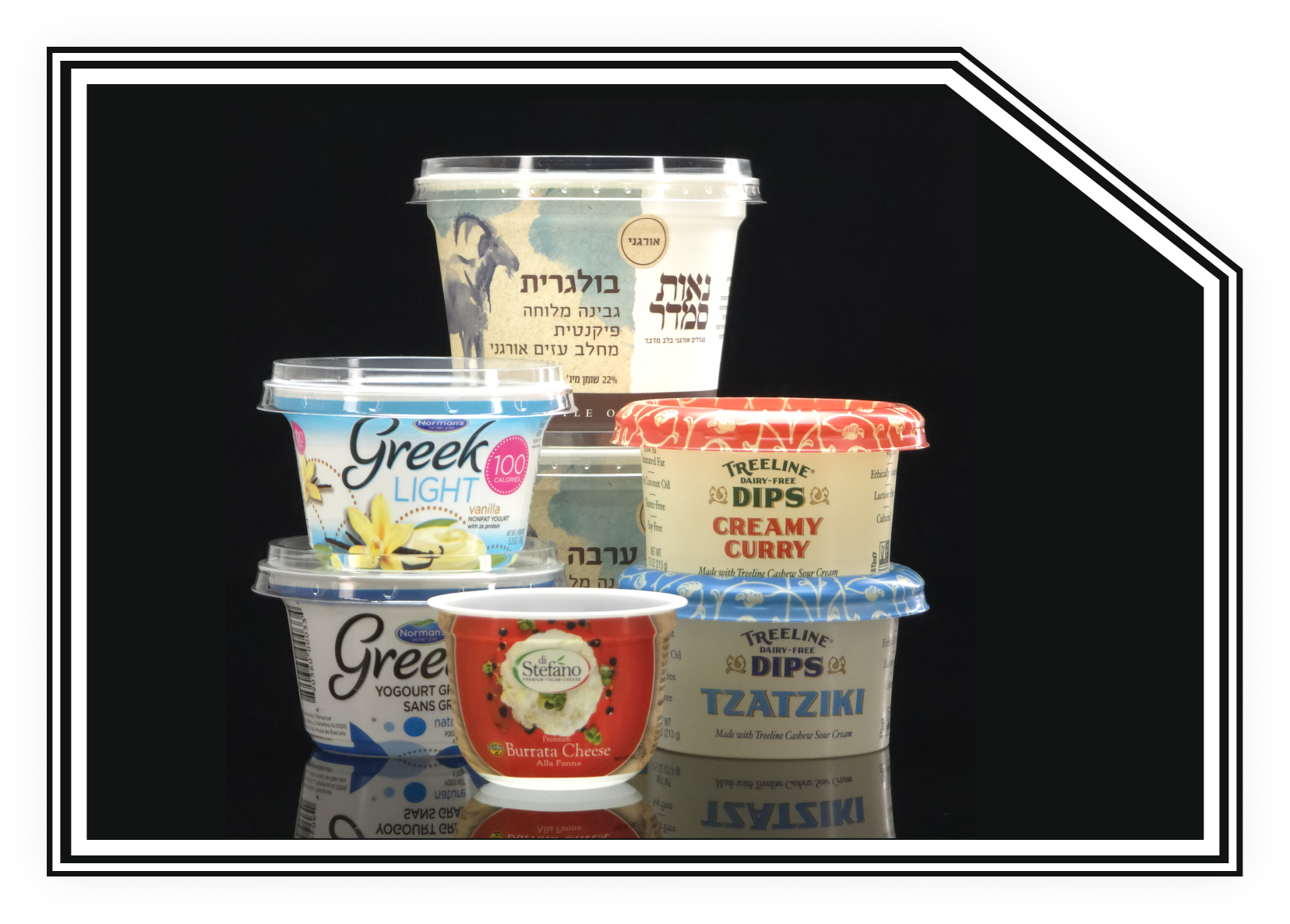
Color Rim Lids
At ARDA Plast, we offer premium color rim lids made entirely from PET, designed to enhance the appearance of your food packaging. These lids feature a distinct colored rim that adds a polished, upscale look to ready-to-eat salads, spreads, and other fresh food products. They are a popular choice for brands looking to differentiate themselves on the shelf and convey quality at first glance.
Advantages:
- Elegant, high-end appearance with custom rim coloration
- Made entirely from PET for food safety and material consistency
- Compatible with a wide range of salad and deli-style containers
- Color-coded rims can help differentiate flavors or SKUs
Pantone
Color Match
UV
Resistant
Food
Safe Inks
Color Rim Lid Technology
At ARDA Plast, our color rim lids offer a value-added solution for customers looking to enhance visual differentiation and shelf appeal.
Manufacturing Process
- Material: 100% PET, approved for food-contact
- Sheet Extrusion: PET sheets are produced in-house
- Printing: Rim colors are applied using rotogravure printing
- Thermoforming: Printed sheets are formed into finished lids
- Customization: Customers can choose colors to match brand guidelines or product categories
This process ensures precise color matching and a reliable fit with the corresponding container.
Advantages
- Elegant, high-end appearance with custom rim coloration
- Made entirely from PET for food safety and material consistency
- Compatible with a wide range of salad and deli-style containers
- Color-coded rims can help differentiate flavors or SKUs
Practical Considerations
- Recyclability: While the lids are PET, the added color affects clarity, limiting recyclability in closed-loop "bottle-to-bottle" systems
- Aesthetic Value: Colored rims are primarily used for their premium look and brand distinction, especially in salad packaging
- Compatibility: Designed to match ARDA Plast’s containers of various sizes
Frequently Asked Questions
What are color rim lids typically used for?
Color rim lids are mainly used for chilled foods such as salads packaging to provide a higher-end look and help differentiate products by flavor or type.
Are color rim lids recyclable?
Color rim lids are made entirely from PET, but due to the color printing, they can’t be recycled as clear PET. This may impact their acceptance in some closed-loop recycling systems.
Can I choose any rim color I want?
Yes, ARDA Plast offers full color customization for rim designs.
What makes these lids different from standard PET lids?
Standard PET lids are clear and unprinted, while color rim lids include a decorative colored band around the perimeter, offering a more premium visual appeal.

Digitally Printed Lids

Exclusive Technology by ARDA Plast
At ARDA Plast, we offer a unique decorative solution that provides exceptional branding impact and design flexibility for PET lids: digital printing. Our proprietary, in-house technology prints high-resolution, full-color artwork directly onto PET sheets before thermoforming, resulting in fully decorated lids with seamless visual appeal.
Digitally printed lids are perfect for customers looking for premium shelf presence and strong product differentiation. This decoration method is exclusive to ARDA Plast and is seamlessly integrated into our production process.
Advantages
- Seamless full-lid decoration with photo-quality graphics
- Ideal for product lines with multiple flavors or SKUs
- No need for labels or sleeves—graphics are printed directly on the lid surface
Shrink Sleeves
Direct Printing
PS Labels
Cardboard Wraps
Read More: How It Works
At ARDA Plast, digital lid printing is a fully integrated process:
Technology Overview
- Material: PET sheets, food-contact approved
- Digital Printing: Complete lid artwork (logos, text, patterns) is printed on the flat sheet
- Thermoforming: The printed sheet is shaped into the final lid form, preserving graphic details
- Result: A vivid, retail-ready lid without additional decoration steps
Best Use Cases
- Premium dips, salads, spreads, and plant-based products
- Flavors or variants that benefit from a strong visual identity
- Brands that require professional packaging with flexible batch sizes
Considerations
- Digitally printed PET lids may present recycling challenges due to ink coverage and loss of clarity.
- Higher cost—digital printing on PET sheets is more expensive than dry-offset or labeling methods.
- For optimal results, small text or fine graphic elements should be positioned toward the center of the lid where thermoforming stretch is minimized.
FAQ
Q: How does digital printing differ from other decoration options at ARDA Plast?
A: Unlike dry offset or labeling, digital printing covers the entire lid surface before thermoforming. The result is a seamless, high-resolution finish with no added label.
Q: Why is it more expensive?
A: Digital printing on PET sheets is inherently more costly than other methods such as dry offset or labeling, due to the printing technology, materials, and ink usage.
Q: Can I use any design or colors?
A: Yes. Digital printing supports complex graphics, photographic detail, and full-color designs that are difficult to achieve with other technologies.
Q: What lid sizes are supported?
A: This decoration method is compatible with almost all lid shapes and sizes produced by ARDA Plast.
Contact us to confirm suitability for your specific product.

Contact us
Got an Upcoming Projects? Contact Us Today!
Advanced Engineering for Bespoke Packaging Solutions